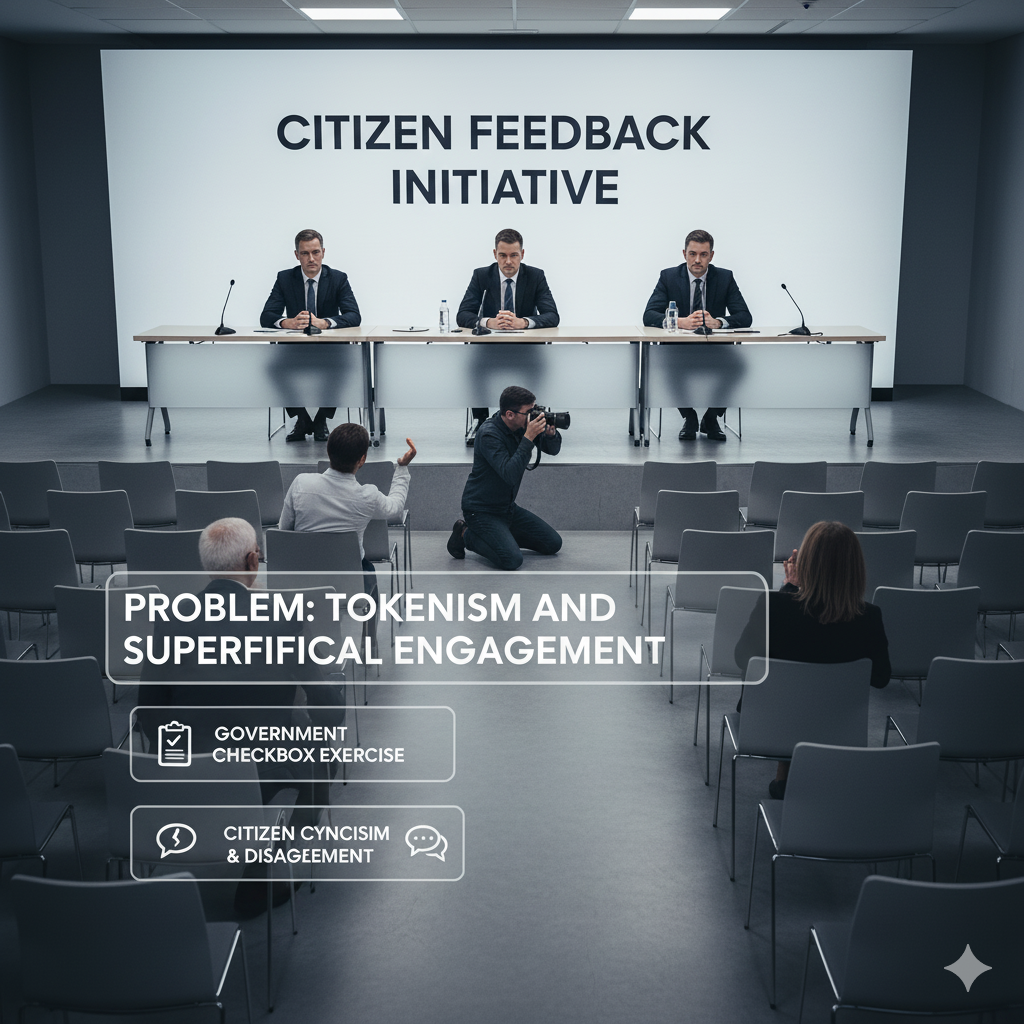
The phrase “citizen-centric governance” is everywhere in policy manifestos, reform agendas, and digital transformation programs. It signals an intention to place citizens at the core of policy design, service delivery, and feedback loops. In theory, it aligns with key principles of good governance—transparency, accountability, responsiveness, and inclusion. In practice, however, three recurring frictions emerge:
1. 𝐓𝐨𝐤𝐞𝐧𝐢𝐬𝐦 𝐯𝐬. 𝐆𝐞𝐧𝐮𝐢𝐧𝐞 𝐀𝐠𝐞𝐧𝐜𝐲
Many initiatives check the “citizen consultation” box—surveys, town halls, suggestion portals—without giving citizens real power to influence outcomes. Participation becomes a performance, not a partnership. Without mechanisms for meaningful co-creation and visible feedback on how citizen input shaped decisions, trust erodes. This is a known gap in citizen-centric frameworks: systems capture voice, but rarely translate it into felt value.
2. 𝐒𝐭𝐫𝐮𝐜𝐭𝐮𝐫𝐚𝐥 & 𝐈𝐧𝐬𝐭𝐢𝐭𝐮𝐭𝐢𝐨𝐧𝐚𝐥 𝐌𝐢𝐬𝐚𝐥𝐢𝐠𝐧𝐦𝐞𝐧𝐭
Public systems are often designed around internal hierarchies, legacy processes, and compliance metrics. “Citizen-centric” becomes an overlay, not a foundational redesign. Studies find that even well-intentioned digital interfaces fail when internal actors don’t internalize the shift—making interactive features underutilized or ignored.
3. 𝐄𝐪𝐮𝐢𝐭𝐲, 𝐀𝐜𝐜𝐞𝐬𝐬, 𝐚𝐧𝐝 𝐑𝐞𝐩𝐫𝐞𝐬𝐞𝐧𝐭𝐚𝐭𝐢𝐨𝐧 𝐆𝐚𝐩𝐬
Focusing on “the citizen” assumes homogeneity. In reality, marginalized groups face digital exclusion, information asymmetry, and cultural barriers. A citizen-centric design that relies solely on apps or online feedback risks amplifying the voices of the already-empowered, while leaving others behind. Comprehensive models must deliberately integrate offline, inclusive channels.
Why “Good Governance” Doesn’t Automatically Equal “Delighted Citizens”
Traditional governance indicators—rule of law, institutional effectiveness, fiscal prudence, or even digitalization of public services, —are necessary but insufficient. They measure outputs, not experience. A department could be efficient on paper but opaque, hard to navigate, or emotionally alienating in everyday interaction.
𝐓𝐡𝐞 𝐂𝐚𝐥𝐥 𝐟𝐨𝐫 𝐂𝐡𝐚𝐧𝐠𝐞
Good governance is necessary (but not sufficient). It’s time to go beyond compliance—moving instead toward civic culture rooted in trust, responsiveness, and delight.
At 𝐄𝐦𝐩𝐨𝐰𝐞𝐫𝐞𝐝 𝐂𝐢𝐭𝐢𝐳𝐞𝐧𝐬 𝐈𝐧𝐢𝐭𝐢𝐚𝐭𝐢𝐯𝐞 we’re not just counting services—we’re creating celebrated experiences. Smart Citizens make Smart governance. Come, explore and join us, support us.